Everything you need to
navigate healthcare pricing
Deep-dive analysis, practical guides, and original research from the team that processes hospital and payer rate data nationwide every month.

Hospital MRFs vs. Payer MRFs
Understand how hospital and payer machine-readable files differ in prices, coverage, formats, identifiers, and update rules, and choose the right source.

Payer Contract Negotiation Checklist
Prepare for payer contract negotiations with a practical checklist for renewal terms, fee schedules, payer mix, reimbursement benchmarks, and supporting evidence.

How to Benchmark Payer Reimbursement Rates
Compare payer reimbursement rates using matched providers, networks, codes, and care settings. Learn how to turn a reliable benchmark into a contracting priority.
Hospital MRF Data Elements Across Final Rules
See how hospital machine-readable file requirements changed across CMS final rules, with plain-language definitions for each data element.
Transparency in Coverage MRF Data Elements
Explore payer MRF specifications and the October 2026 final rule, with future applicability and posting dates clearly distinguished.
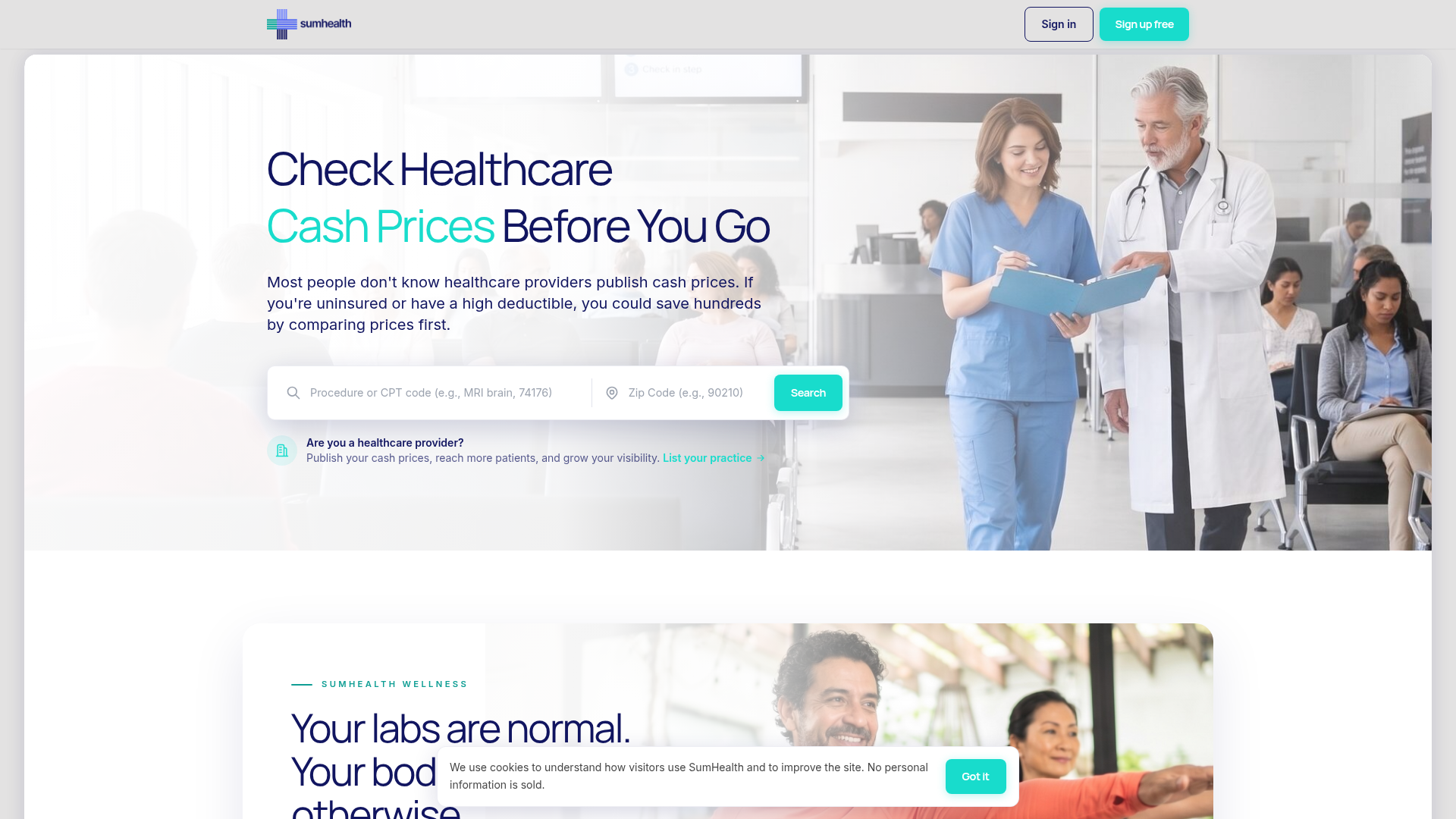
Introducing SumHealth Search: Clear Healthcare Cash Prices Before You Go
SumHealth Search turns complex hospital pricing data into a free, approachable way to compare published cash prices—and gives providers a place to publish their own.

Half of Hospitals Charge Cash Patients Less Than Insurers Pay
We compared the posted cash price against the median commercial negotiated rate for a brain MRI at 539 U.S. hospitals. At half of them, cash is cheaper.

You Gave Them Skin in the Game. Nobody Gave Them the Scoreboard.
Health shares, RBP plans, ICHRA, DPC, HSAs: five different structures, one identical failure. The member is the payer. The payer cannot see the price.

The Most Expensive Word in Health Care Is "Or"
The estimate is not a price. Four committees voted yes in nine weeks — and not one of them would say what a price is.

The History of Healthcare Price Transparency
A visual timeline of how healthcare prices came out of hiding — from chargemasters and state pioneers to federal rules, million-dollar fines, and today's enforcement era.
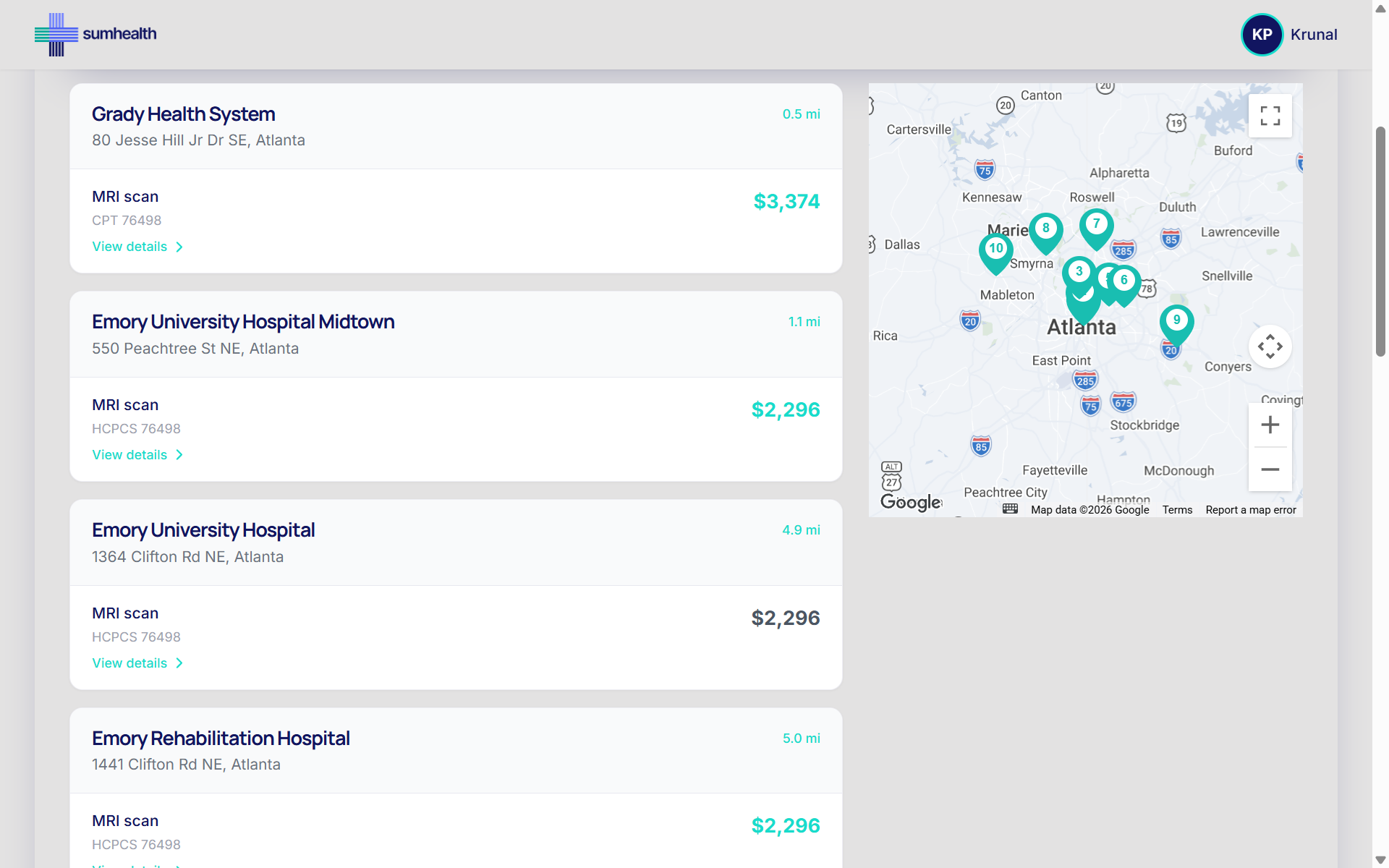
The Price of Not Knowing the Price
Health insurance costs are climbing again in 2026 and the ACA subsidy cliff is pushing millions to go without coverage. Here's why paying cash can beat insurance, and how SumHealth's free cash price checker puts real hospital prices in patients' hands.
Hospital MRF Compliance Checklist
Review hospital MRF accessibility, standard charges, allowed amounts, attestation, and organizational NPIs against CMS requirements, with links to primary guidance.

CMS Enforcement Acceleration: What the 2025 Penalty Wave Means for Hospitals
An analysis of CMS enforcement patterns in 2025, including the expansion of audit scope, penalty acceleration for repeat violations, and what hospitals should do immediately to reduce their exposure.
Hospital Price Transparency: 2025 Guide and 2026 Update
Understand the 2025 hospital price transparency baseline and the 2026 changes to allowed amounts, attestation, and NPIs, with CMS sources and a review checklist.

Regional Health System Achieves Full MRF Compliance in 30 Days After CMS Warning Letter
After receiving a CMS corrective action notice, a 12-hospital regional health system used SumHealth's validation suite to identify and resolve 1,400+ MRF errors — and achieve compliance before the penalty clock ran.

How a 2,500-Employee Manufacturer Saved $1.4M in Year One Using MRF Benchmarking
A Midwest manufacturer used SumHealth's BenchMarks platform to discover their TPA rates were 23% above market median — and renegotiated their ASO agreement to capture over $1.4M in savings.

Why Price Transparency Data is Non-Negotiable for Your Self-Insured Plan
Self-insured employers are leaving millions on the table by not using healthcare price transparency data to audit their plans, benchmark rates, and negotiate smarter contracts.

Q1 2025 MRF Data Quality Report: Trends Across 700+ Payer Files
SumHealth's quarterly analysis of machine-readable file quality across the U.S. payer landscape — covering schema compliance, NPI accuracy, file accessibility, and year-over-year improvement trends.
An Analysis of Payer Machine-Readable Files (MRFs) and the Challenges of Healthcare Price Transparency
A technical deep-dive into the structural challenges of payer MRFs: file size, schema inconsistencies, provider matching, and why processing them at scale requires specialized infrastructure.

The Current State of Hospital Price Transparency in February 2025
Hospital price transparency has become a cornerstone of healthcare reform, with new regulations taking effect January 1, 2025. An overview of the current state of compliance, consumer impact, and what comes next.

Transparency in Coverage: A 5-Minute Briefing for Benefits Leaders
A concise summary of the TiC rule's core requirements, who it applies to, what data it makes available, and why it matters for employers, payers, and providers.

Hospital Pricing Transparency Whitepaper
A deep dive into the laws, data standards, penalties, and fee structures behind CMS hospital price transparency.

How AI Is Transforming Healthcare
Six ways artificial intelligence and generative AI are reshaping global healthcare — from cardiac imaging and lung cancer prediction to drug discovery, documentation, chronic pain, and mental health support.

February 2024 Hospital Price Transparency Report Reveals Widespread Noncompliance
Key insights from the February 2024 Hospital Price Transparency Compliance Report, which analyzed 2,000 U.S. hospitals and found only 34.5% fully compliant with the federal price transparency rule.

A Quick Glimpse into Healthcare Price Transparency Efforts
A look at the legislation and initiatives working to lift the veil on medical billing — from the Hospital Price Transparency Rule to the No Surprises Act and state-level efforts — and what still stands in the way.

Price Transparency: Bringing Clarity to the Cost of Health
Why pricing transparency is a fundamental patient right, how the Hospital Price Transparency Rule and its penalties work, and how SumHealth Search makes hospital pricing data clear and comparable.